

Product Designation System
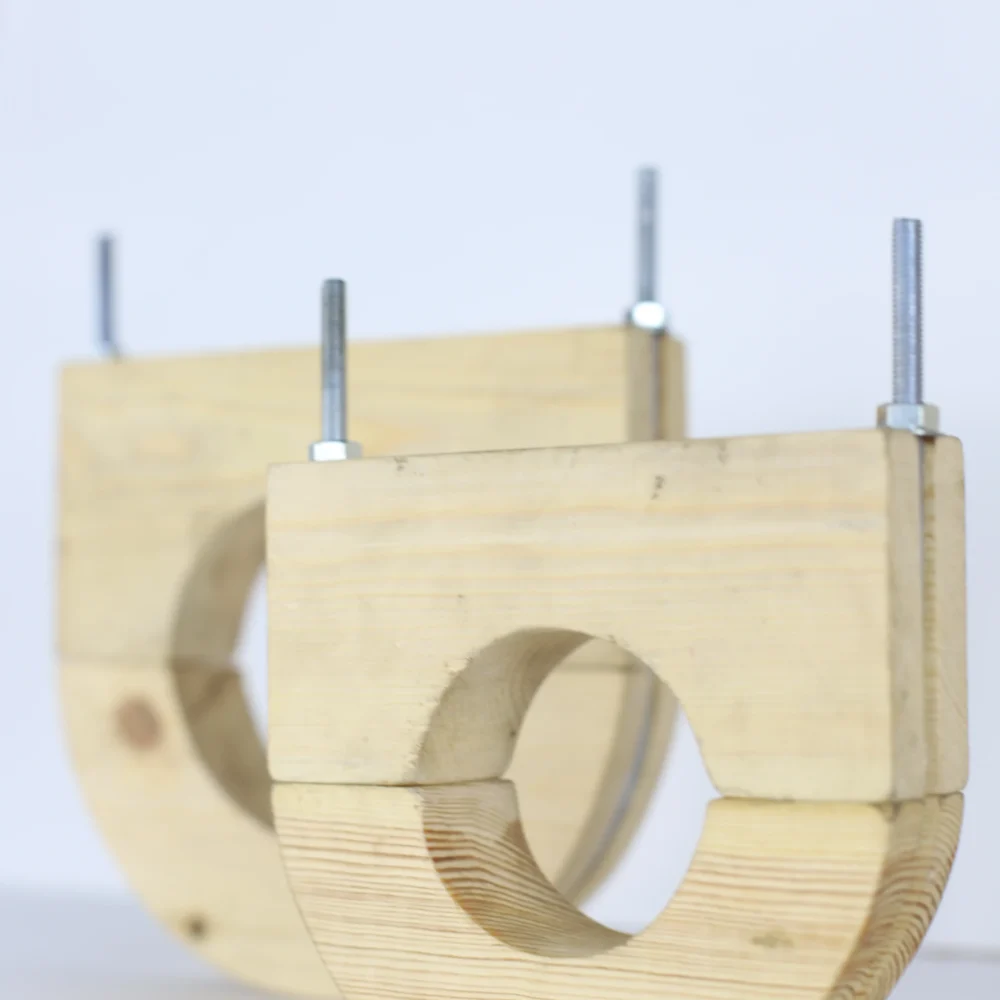
NAC-RCL-XX | NAC = New Age Corporation | RCL = Riser Clamp with Lining | XX = Nominal pipe size (DN)
Complete Technical Specifications
| Specification | Details | Specification | Details |
| Material (Clamp) | Mild Steel (ES 138 / A36) | Construction | Two-piece flat bar, bolted assembly |
| Lining Material | EPDM high-density rubber | Pipe Size Range | DN15 to DN600 (½” to 24″) |
| Finish Options | Electro-Galv / Hot-Dip / Pre-Galv / Plain | Operating Temp | -20°C to +110°C |
| Mounting Method | Rests on structural slab or beam | Noise Reduction | Up to 18 dB |
| Load Type | Carries vertical dead load (pipe + fluid) | Bolt Size | M10, M12, M16, M20 |
| Installation | Bolted around pipe below load point | Standards | Egyptian Code / MSS SP-58 |
Load Capacity & Support Spacing Guidelines
The following load capacities are based on vertical pipe weight plus fluid content, with a 3:1 safety factor. Riser clamps must rest on structural floors, beams, or steel brackets—NOT suspended from threaded rod.
| Product Code | Pipe Size | Pipe OD (mm) | Length Between Hole Centers (mm) | Bolt Size | Max Load (kg) |
| NAC-RCL15 | ½” (DN15) | 21.3 | 57 | M10 | 750 |
| NAC-RCL20 | ¾” (DN20) | 26.7 | 68 | M10 | 750 |
| NAC-RCL25 | 1″ (DN25) | 33.4 | 76 | M10 | 750 |
| NAC-RCL32 | 1¼” (DN32) | 42.1 | 90 | M10 | 750 |
| NAC-RCL40 | 1½” (DN40) | 48.2 | 110 | M10 | 750 |
| NAC-RCL50 | 2″ (DN50) | 60.3 | 130 | M10 | 1,250 |
| NAC-RCL65 | 2½” (DN65) | 73.0 | 142 | M12 | 1,250 |
| NAC-RCL80 | 3″ (DN80) | 88.9 | 161 | M12 | 1,750 |
| NAC-RCL100 | 4″ (DN100) | 114.3 | 190 | M12 | 1,850 |
| NAC-RCL150 | 6″ (DN150) | 168.3 | 258 | M16 | 2,250 |
| NAC-RCL200 | 8″ (DN200) | 219.1 | 333 | M16 | 2,250 |
| NAC-RCL250 | 10″ (DN250) | 273.0 | 409 | M16 | 3,600 |
| NAC-RCL300 | 12″ (DN300) | 323.8 | 467 | M20 | 3,600 |
| NAC-RCL400 | 16″ (DN400) | 406.4 | 583 | M20 | 4,500 |
| NAC-RCL500 | 20″ (DN500) | 508.0 | 708 | M20 | 4,500 |
| NAC-RCL600 | 24″ (DN600) | 609.6 | 833 | M20 | 5,800 |
Note: Maximum load includes pipe self-weight, fluid content, and insulation. Consult structural engineer for floor loading verification on multi-story risers. For seismic zones, additional lateral restraints may be required per local codes.
Dimensional Specifications
| Code | Pipe Size | Clamp Width (mm) | Material Thickness | EPDM Thickness | Weight (approx) |
| NAC-RCL15 | ½” (DN15) | 40 | 3.0 mm | 3 mm | 420 g |
| NAC-RCL20 | ¾” (DN20) | 45 | 3.0 mm | 3 mm | 480 g |
| NAC-RCL25 | 1″ (DN25) | 50 | 3.0 mm | 3 mm | 560 g |
| NAC-RCL32 | 1¼” (DN32) | 55 | 3.0 mm | 3 mm | 680 g |
| NAC-RCL40 | 1½” (DN40) | 60 | 3.0 mm | 4 mm | 780 g |
| NAC-RCL50 | 2″ (DN50) | 70 | 4.0 mm | 4 mm | 1.2 kg |
| NAC-RCL65 | 2½” (DN65) | 80 | 4.0 mm | 4 mm | 1.5 kg |
| NAC-RCL80 | 3″ (DN80) | 90 | 4.0 mm | 4 mm | 1.9 kg |
| NAC-RCL100 | 4″ (DN100) | 110 | 5.0 mm | 5 mm | 2.8 kg |
| NAC-RCL150 | 6″ (DN150) | 140 | 5.0 mm | 5 mm | 4.2 kg |
| NAC-RCL200 | 8″ (DN200) | 170 | 6.0 mm | 5 mm | 6.5 kg |
| NAC-RCL250 | 10″ (DN250) | 200 | 6.0 mm | 6 mm | 9.2 kg |
| NAC-RCL300 | 12″ (DN300) | 230 | 8.0 mm | 6 mm | 13.5 kg |
| NAC-RCL400 | 16″ (DN400) | 280 | 8.0 mm | 6 mm | 22.0 kg |
| NAC-RCL500 | 20″ (DN500) | 340 | 10.0 mm | 8 mm | 35.0 kg |
| NAC-RCL600 | 24″ (DN600) | 400 | 10.0 mm | 8 mm | 48.0 kg |
Material & Finish Specifications
Steel Clamp Body
| Finish Type | Coating Specification | Recommended Application |
| Electro-Galvanized (EG) | 12–25 μm per ASTM B633 | Indoor mechanical shafts, dry riser rooms |
| Hot-Dip Galvanized (HDG) | ≥55 μm per ASTM A153 | Outdoor risers, coastal environments, fire protection systems |
| Pre-Galvanized (PG) | Standard mill coating | General construction, standard building risers |
| Plain (Uncoated) | No coating | Paint-ready or controlled indoor environments |
EPDM Lining Specification
- Material: EPDM (Ethylene Propylene Diene Monomer) high-density rubber
- Hardness: 65 ± 5 Shore A
- Temperature Range: -20°C to +110°C
- Properties: Load-bearing under compression, water-resistant, thermal expansion-tolerant
- Function: Vibration damping, noise reduction (up to 18 dB), anti-galvanic protection, load cushioning
- Standards: ASTM D2000 compliant
Vertical Riser Support Application
The Riser Clamp with EPDM Lining is specifically designed for vertical pipe systems that transfer dead weight through building structure, providing:
Primary Functions
- Load Transfer: Carries full vertical dead weight (pipe + fluid + insulation) through structural floor or beam
- Alignment Control: Acts as rigid guide to maintain vertical alignment through floor penetrations
- Noise Isolation: EPDM lining reduces structure-borne vibration and thermal expansion noise up to 18 dB
- Pipe Protection: Prevents pipe surface damage at support points during thermal expansion/contraction
Critical Design Note
⚠️ NOT FOR THREADED ROD SUSPENSION
This product is designed to REST on structural members, not to be suspended. The clamp transfers vertical load downward through compression. Do not attach threaded rods to this clamp for hanging applications—use Pipe Hangers (NAC-SUP series) instead.
Key Performance Characteristics
- High Load Capacity: Up to 5,800 kg (DN600/24″) for heavy multi-story risers
- 18 dB Noise Reduction: Protects occupied spaces from pipe-transmitted structure noise
- Thermal Expansion Accommodation: EPDM compresses/expands with pipe movement without chatter
- Installation Flexibility: Can be installed during initial pipe placement or added to existing risers
- Long-Term Reliability: EPDM maintains performance through repeated thermal cycles
Typical Installation Locations
- High-rise building vertical risers (HVAC, plumbing, fire protection)
- Mechanical shaft floor penetrations and support points
- Structural beam seats at equipment room levels
- Core wall riser supports in residential/commercial towers
- Plant room floor-level load transitions
- Multi-story drainage and vent stacks
- Fire protection standpipe and sprinkler risers
Application Selection Guide
| System | Typical Use | Recommended Sizes | Finish | Critical Feature |
| Fire Protection Risers | Standpipes, sprinkler mains | DN100–DN300 | Hot-Dip Galvanized | High load capacity, code-compliant support |
| HVAC Chilled Water Risers | Vertical distribution CHW/HHW | DN50–DN200 | Hot-Dip Galvanized | Acoustic isolation in occupied buildings |
| Domestic Water Risers | Potable water vertical supply | DN40–DN150 | Electro-Galvanized | Noise control for residential comfort |
| Drainage & Vent Stacks | Waste, vent, roof drainage | DN65–DN200 | Pre-Galvanized | Structure noise isolation during discharge |
| Process Piping Risers | Industrial vertical distribution | DN80–DN300 | Hot-Dip Galvanized | Heavy load capacity, thermal stability |
| Building Service Mains | Mixed-use high-rise systems | DN100–DN600 | Hot-Dip Galvanized | Maximum load capacity for large risers |
Installation Requirements
Pre-Installation Checklist
- Structural Verification: Confirm floor/beam can support calculated vertical load (pipe + fluid + insulation)
- Load Calculation: Total riser weight from clamp to top = (pipe weight/m × height) + (fluid weight/m × height) + insulation
- Clamp Placement: Position clamp at structural support points per mechanical drawings (typically every floor or every other floor)
- Support Surface: Ensure structural slab/beam is level, clean, and free from deterioration
- Alignment Verification: Confirm pipe centerline alignment through floor sleeves before final clamping
Installation Procedure
- Prepare structural support surface
Clean and level structural slab or beam seat where clamp will rest
If using steel angle bracket, verify bracket is welded/anchored per structural drawings
Ensure support surface is continuous and will not deflect under load
- Position clamp on pipe below load point
Open clamp by removing bolts
Position clamp around pipe just BELOW any welded support lugs or load-bearing attachments
Clamp should be positioned so load transfers through pipe wall to clamp, then to structure
Inspect EPDM lining for proper seating—ensure no gaps or displacement
- Close and bolt clamp assembly
Align clamp halves around pipe
Insert bolts (M10, M12, M16, or M20 depending on size)
Tighten bolts gradually in stages, alternating sides to ensure even compression
Recommended torque:
- M10: 40–45 Nm
- M12: 60–65 Nm
- M16: 120–130 Nm
- M20: 200–220 Nm
CRITICAL: Do not overtighten—EPDM should compress but not extrude from clamp edges
- Seat clamp on structural support
Lower pipe assembly so clamp rests fully on structural floor slab or beam
Verify clamp is level and making full contact with support surface
Ensure no gaps between clamp bottom and structural member
If using grout pad, allow grout to cure before loading
- Verify load path and alignment
Check that vertical pipe alignment is maintained through floor sleeve
Confirm no binding or misalignment at penetration points
Verify clamp is not supporting lateral loads (use separate guides if needed)
Perform final walk-through inspection before system pressurization
Installation Spacing Guidelines
| Building Height | Riser Clamp Spacing | Additional Considerations |
| Low-rise (1–5 floors) | Every floor or every other floor | Verify structural capacity of each support |
| Mid-rise (6–15 floors) | Every floor for DN100+, every 2 floors for smaller | Consider intermediate guides between load clamps |
| High-rise (16+ floors) | Every floor for all sizes | Seismic lateral restraints required per code |
Why Specify New Age Riser Clamps with EPDM Lining?
| Advantage | Benefit to Your Project |
| Integrated EPDM Lining | Factory-installed rubber ensures consistent performance—no field cutting or fitting required |
| 18 dB Noise Reduction | Meets acoustic comfort requirements in hospitals, hotels, residential towers without additional treatments |
| High Load Capacity | Up to 5,800 kg per support point—handles heavy multi-story risers without intermediate supports |
| Thermal Expansion Isolation | EPDM cushions thermal movement without metal-to-metal chatter or structure-transmitted noise |
| Rigid Load-Bearing Design | Two-piece bolted construction safely transfers vertical dead load to building structure |
| 100% Egyptian Manufacturing | 3–7 day delivery (Cairo/Giza), local technical support, competitive pricing vs. imports |
| Certified Galvanization | Long service life in mechanical shafts, outdoor risers, and coastal high-rise environments |
Product Comparison: Riser Clamps vs. Other Supports
| Feature | Riser Clamp w/ Lining | Pipe Hanger w/ Lining | Half Saddle | |—|—|—| | Load Direction | Vertical (downward to floor) | Suspended (upward to ceiling) | Horizontal (into wall) | | Mounting | Rests on structural floor/beam | Hangs from threaded rod | Mounts to vertical wall | | Vibration Isolation | ✓ EPDM lining | ✓ EPDM lining | ✗ Metal contact | | Noise Reduction | Up to 18 dB | Up to 18 dB | None | | Load Capacity | 750–5,800 kg | 460–950 kg | 35–350 kg | | Typical Use | Vertical risers (multi-story) | Horizontal ceiling runs | Wall-mounted horizontal/vertical | | Pipe Orientation | Vertical only | Horizontal only | Horizontal or vertical |
Riser System Design Considerations
Load Calculation Example
Scenario: 10-story building with DN150 (6″) chilled water riser, 30m total height
- Pipe Weight: 40.3 kg/m × 30m = 1,209 kg
- Fluid Weight (water): (π × 0.1683²/4) × 1000 kg/m³ × 30m = 668 kg
- Insulation Weight: ~8 kg/m × 30m = 240 kg
- Total Load: 1,209 + 668 + 240 = 2,117 kg
Support Selection: NAC-RCL150 (max load 2,250 kg) ✓ Adequate with safety margin
Recommendation: Install riser clamps every 2-3 floors with intermediate pipe guides between clamps for alignment control.
Structural Coordination
- Floor Loading: Confirm structural drawings show adequate slab/beam capacity at clamp locations
- Penetration Sleeves: Oversized sleeves (pipe OD + 100mm minimum) to allow thermal expansion
- Fire Stopping: Coordinate with fire protection contractor for proper sleeve fire-stop systems
- Seismic Bracing: In seismic zones, add lateral restraints per ASCE 7 or Egyptian Seismic Code
Standards & Certifications
- ✓ Egyptian Mechanical Code – Vertical riser support spacing, load calculations, structural coordination
- ✓ NFPA 13 – Fire protection riser support requirements (where applicable)
- ✓ MSS SP-58 – Pipe support types and geometry equivalence (riser clamp category)
- ✓ ASTM B633 – Electro-Galvanized coating specification (12–25 μm)
- ✓ ASTM A153 – Hot-Dip Galvanized coating specification (≥55 μm)
- ✓ ASTM D2000 – EPDM rubber material specification
- ✓ Egyptian Standard ES 138 – Mild steel material classification (equivalent to ASTM A36)
- ✓ ISO 9001:2015 – Quality management system certification
Engineering Support
Technical Assistance:
- Vertical riser load calculation verification (pipe + fluid + insulation weight)
- Support spacing recommendations based on building height and pipe size
- Structural coordination for floor loading and beam seat design
- Acoustic performance calculations for noise-sensitive buildings
- Thermal expansion analysis for riser systems
- Seismic lateral restraint design (coordination with structural engineer)
- On-site installation guidance and contractor coordination
Response Time: Technical queries answered within 24 hours
After-Sales Support: Product issue resolution, installation troubleshooting, fast replacement for defects
Custom Solutions: Special sizes (DN > 600mm), heavy-duty brackets, or custom EPDM grades available for unique high-rise projects
Support Limitations & Alternative Products
When NOT to Use Riser Clamps
❌ Horizontal piping runs (use Pipe Hangers or Saddles instead)
❌ Suspended ceiling applications (use Pipe Hangers with threaded rod)
❌ Light-duty branch lines (oversized for small pipes—use Saddles instead)
❌ Applications without structural floor support (requires solid bearing surface)
Recommended Alternatives
For applications requiring different support characteristics:
- Horizontal ceiling runs: Use Pipe Hanger with EPDM Lining (NAC-SUP-1XX) suspended from threaded rod
- Wall-mounted vertical risers: Use Half Saddle (NAC-HS) for wall attachment
- Light branch lines: Use Light Saddle (NAC-LS) for smaller diameter pipes
- Adjustable height applications: Use clevis hangers with threaded rod adjustment
- Non-acoustic applications: Use Riser Clamp without lining for cost savings (if acoustic isolation not required)
Trusted on Major Projects
New Age Riser Clamps with EPDM Lining are specified across Egypt’s most demanding high-rise infrastructure:
- New Administrative Capital – Government tower HVAC and fire protection risers
- Opera House Complex – Acoustic-sensitive vertical distribution systems
- Military Complex Projects – Secure facility mechanical risers
- New Giza Development – Residential high-rise plumbing and HVAC risers
- Cairo Downtown High-Rises – Historic building retrofit vertical systems
- Upper Egypt Hospitals – Medical facility multi-story mechanical systems
- Red Sea Resort Towers – Coastal high-rise with corrosive environment protection
- Industrial High-Bay Facilities – Heavy process piping vertical distribution
Trusted by leading contractors: Orascom Construction, Hassan Allam Holding, Arab Contractors
NEW AGE
Supporting What Builds the Future
100% Egyptian Manufacturing | ISO 9001:2015 Certified | Trusted by Egypt’s Top Contractors




Reviews
There are no reviews yet.